With only 11 more days to go, please help support in any way you can this Kickstarter project - Hariyo Chowk! Hariyo Chowk, meaning a "green square" in Nepalese, offers the community members in Katmandu, Nepal a much needed vibrant urban green space to play, create, and learn. For more information visit their blog and Kickstarter page!

Hello! Welcome to the blog of the WCC - a feminist mental health and social action organization.
Showing posts with label global women. Show all posts
Showing posts with label global women. Show all posts
April 24, 2012


January 10, 2012
Human Trafficking Awareness Day 2012

What is human trafficking anyway?
Well, in short human trafficking is slavery. Yes, modern day slavery. More specifically human trafficking is the buying and selling of human beings across national and international borders for the use of labor and sexual servitude. You may be thinking, "how can this be?" Well, it is estimated that there are over 30 million slaves in this world - more than in any other point in human history.
There are numerous organizations, campaigns, films and advocates such as The Polaris Project, Soroptimist, Not for Sale II, NightLight, GEMS, and The Project to End Human Trafficking. As well as resources such as 10 human trafficking videos in 2008 and 2009 and 10 essential human trafficking reads and action to take right now!
January 08, 2012
Speaking Their Voices - Women and Girls of Beit Shemesh
Beit Shemesh is a neighborhood of approximately 80,000 in Jerusalem, Israel. It is home to an ultra-Orthodox sect of Jewish people, along with many other residents. With an increase of immigrants, especially of American expatriates, there are rising tensions between the ultra Orthodox and other Orthodox residents. Most recently, an uproar began over the establishment of a new national religious school for girls, Orot Banot. Upon the opening of Orot Banot, there were violent protests from the most ultra-Orthodox men who feel the students don't abide by the special extra stringent rules of dress and lifestyle espoused by the ultra-Orthodox community. Many of these girls, as young as 7 years old, have been harassed, cursed at, spat on, and have had rocks thrown at them all in the name of what? God, real estate, "self-preservation"? This is mind boggling! Check out the video below.
Despite (and perhaps because of) these horrific offenses, women and girls in Beit Shemesh are speaking out! Their voices will not be extinguished. Anti-extremist rallies have also been held and hopefully will continue - if nothing else then to protect the right of our girls to live in a safe, violence-free world.
Despite (and perhaps because of) these horrific offenses, women and girls in Beit Shemesh are speaking out! Their voices will not be extinguished. Anti-extremist rallies have also been held and hopefully will continue - if nothing else then to protect the right of our girls to live in a safe, violence-free world.
December 02, 2011
La Puerta Abierta - The Open Door: Support Their Campaign!
Dear friends,
Please check out the link below to learn about our most recent effort to raise much-needed funds for ICFamWell's local initiative- La Puerta Abierta/The Open Door. Time is running out-- please consider your support!
We have been training local, bilingual practitioners to provide pro-bono individual and family counseling services for the Latino immigrant community of the Delaware Valley, particularly those facing language, legal and economic barriers to service. Most recently, we launched a Youth Mentorship Initiative that provides therapeutic support to younger, undocumented youth who do not have access to services elsewhere, because of their status. All training and services are free, as we are an entirely volunteer-driven organization.
For more information visit our Indiegogo campaign page HERE!
For more information visit our Indiegogo campaign page HERE!
Please consider your support- in any amount. All donations are appreciated and bring us closer to our goal!. Even if you can't make a financial contribution, please spread the word to your friends and family. If you have a facebook account, please post and "like" us on facebook,and/or post a comment on our Indiegogo site. It all counts!!
La Puerta Abierta
December 01, 2011
World AIDS Day 2011 - Getting To Zero

This year is "getting to zero." Currently, there are 2.7 million individuals living with HIV/AIDS and over half of them are women. In our local and global communities education, prevention and action is key!
If you don't know your status, you should! There is no excuse. It is fast, easy and free. HIV testing information HERE.
If you need further information about HIV/AIDS please contact us at the WCC! We have years of experience in the field of HIV/AIDS and no question is a stupid, embarrassing or shameful one.
Contact us at hello@womenscollaborativecircle.org.
November 09, 2011
Professor X and the Half Breed - Half Breed Haven

Magneto holds his hand up and with all his might, attempting
to bend the metallic water tower he sees in the distance. As he furrows his
brow, he thinks about the sadness and anger that fuels him, about how different
he is from the rest of the world.
Professor X can see the future, his telepathic powers
helping to save lives and cities. Like Magneto, he feels out of place, but
there is this powerful emotion that rings inside his head, telling him Belong!
Belong!
Last weekend after meeting these two X Men for the first
time (yes, I know I am many decades late…) I had to ask:
What does the half breed do with his or her pain?
The X-Men, of Marvel Comic fame, present two courses of
action for all of us half breeds.
Conform (to society, blend in and hide our superpowers) or
Separate (and celebrate our difference even if it means a life of eternal
isolation)?
In the few months since I began my blog, Half Breed Haven, I
have pondered this question trying to understand both what a half breed is, (Is
it someone who is of mixed race or religion? Is it anyone who feels out of
place? ) and what influences a half breed’s decision-making process around the
question posed by the X Men- Conform or Separate?
At times I am Magneto, angrily crushing the skulls of those
who don’t except me and then there are moments when I am Professor X, eager to
be considered an honored member of the place where I am.
I caught myself acting like Magneto this week when I
couldn’t pronounce a word with the right Hebrew accent and I said to my staff,
“You know what I mean, I can’t say it in your accent” separating
myself from everyone in the room. The looked at me quizzically, perhaps not
understanding why I was isolating myself from them.
Happily there are also times when I feel like I really
belong, like that email I got from my boss a few days ago telling me how
eloquent I am in Hebrew and how I can’t use the “new immigrant” ticket anymore
to differentiate myself from the people around me.
Unlike Magneto and Professor X, more often than not, my
reactions to feeling out of place are unconscious and reactive. My out of
place-ness does not dictate everything I do, but it is always there, hovering
above my soul like a humming bird, flitting around in and out of sight,
reminding me that I am loved when I feel like a wall flower and kicking me in
the butt when I am feeling powerful, part of the group. I am a half and half
breed- I have the fury of the outcast Magneto and the determination to belong
of Professor X.
I guess we are all half and half -breed- We are at once like
Magneto and Professor X, toying with these alternate states of belonging and loneliness,
forever searching for a place that makes us feel normal, whatever that is…
WCC guest post contributor Tamar
Zaken is a social worker, informal educator and writer who lives in Jerusalem.
She is the Director of Volunteer Service Learning at Memizrach Shemesh- the
Center for Jewish Social Activism in Israel. She started halfbreedhaven.com, a blog about mixed ethnic/racial
identity, in order to explore her Kurdish/Hungarian/Jewish/American/Israeli
identities, and to create a place for other halfbreeds (however they may define
themselves...) to discuss, deliberate, enjoy and celebrate their halfbreed
heritage.
September 06, 2011
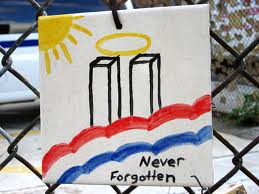
A Tribute to 9/11/01 - My Social Work Perspective

I was 23 years old the morning I got on
the 1/9 subway line from 235th street station down to Christopher
Street and 7th Avenue. I was basking in the calm and quiet that is
the West Village in early morning beginning anew and recovering from the rhythms
of the previous night. Small Ecuadorian men were washing and sweeping the
sidewalks clean, keeping up appearances outside hot spots such as Babbo
Ristorante and charming four-story brownstone residences where wealth resides
and poverty sleeps overnight on its stoop.
The contrast is striking; it always is in major urban playgrounds. The
lines of vulnerability are not often blurred and everyone knows their place. 5th
avenue and Washington Square north was no exception; until that morning. That
morning, everyone was vulnerable.
September 11, 2001 was my first day of classes as a transfer student at
New York University’s then Ehrenkranz School of Social Work (NYU). Walking to class that morning I was not
consciously thinking how entering the academic and professional world of social
work would change my life or how the sense of a plane “flying low” would change
thousands of people’s lives. Moments
later on the corner of Washington Square North and University place word
instantaneously spread that a plane was indeed flying low and hit a building
–the world trade center.
 In disbelief, a group of us rushed to 5th avenue and
Washington Square North and at the crossroads of extreme wealth, sickening
poverty, starving artists, underserved domestic workers caring for others’
children, inquiring academics, and international passersby – in that moment,
the portrait so often photographed through the outline of the arches with its
iconoclastic shapes and romantic visions were awash. Beyond the historical Washington
Square Arch I stared in disbelief at an unthinkable an unimaginable sight. A
sight so unimaginable my brain could not comprehend the unfolding atrocity that
would forever make its mark on our individual and collective histories. Amid
the confusion, noise, chaos and unfolding reality that the United States was
under attack by terrorists, I clearly heard our school’s faculty members mutter
to one another, “this is going to change our profession forever.” Those words felt profound, daring and
prophetic, but at that time I couldn’t imagine how.
In disbelief, a group of us rushed to 5th avenue and
Washington Square North and at the crossroads of extreme wealth, sickening
poverty, starving artists, underserved domestic workers caring for others’
children, inquiring academics, and international passersby – in that moment,
the portrait so often photographed through the outline of the arches with its
iconoclastic shapes and romantic visions were awash. Beyond the historical Washington
Square Arch I stared in disbelief at an unthinkable an unimaginable sight. A
sight so unimaginable my brain could not comprehend the unfolding atrocity that
would forever make its mark on our individual and collective histories. Amid
the confusion, noise, chaos and unfolding reality that the United States was
under attack by terrorists, I clearly heard our school’s faculty members mutter
to one another, “this is going to change our profession forever.” Those words felt profound, daring and
prophetic, but at that time I couldn’t imagine how. 
I have held onto those seemingly prophetic words for nearly a decade,
though throughout my academic and clinical career I have only seen glimpses of
how I expected those words to manifest.
In obvious and direct ways the NYU social work faculty as well as
neighboring schools and community social workers participated in provided
crisis counseling, assisting with victim services and relief efforts of various
sorts. There was no shortage of
volunteerism, and I was aware of our faculty and the social work community at
large working tirelessly on behalf of the victims, survivors, City of New York
and our country. The obvious applications
of social work was apparent in providing trauma based therapeutic
interventions, concrete social services such as navigating survivor funds in
years to come and assistance with benefits, shelter, clothing, food, etc., and
shortly in subsequent years research and literature supporting our knowledge
base of trauma work. However, I had a
sense that this attack, this literal crash would shift perspectives and
consciousness as to the environment and global world that we are now living and
working in as social workers.
August 06, 2011
Behind the Scenes at the WCC
What motivates us to do all the hard work we do at the WCC? You! That means you in all your unique and multiple identities and experiences of self. Without it and without your stories, I am certain our world would be a really boring place. Sometimes, though, all of these unique parts of ourselves and our numerous life roles can get very confusing and overwhelming, and at times we can feel lost. But at the WCC we recognize that navigating multiple identities is a fact of our 21st century global and interconnected lives.
So what does this all mean exactly? Well, take a look at the following videos from TED, for example. TED is a global platform to share and spread ideas worth knowing about. The WCC thinks that YOU and your stories are worth knowing about. Sharing pieces of ourselves with each other may help us feel more comfortable in our own skins and generate greater clarity and purpose in our lives. I love these TED videos where actress Thandie Newton and novelist Chimamanda Ngozi Adichie speak about their stories, identities, and experiences within a larger cultural context.
What is your story? How do you experience your self and your multiple and complex roles? Do you at times feel overwhelmed? Share your thoughts with us; we would love to hear them.
So what does this all mean exactly? Well, take a look at the following videos from TED, for example. TED is a global platform to share and spread ideas worth knowing about. The WCC thinks that YOU and your stories are worth knowing about. Sharing pieces of ourselves with each other may help us feel more comfortable in our own skins and generate greater clarity and purpose in our lives. I love these TED videos where actress Thandie Newton and novelist Chimamanda Ngozi Adichie speak about their stories, identities, and experiences within a larger cultural context.
What is your story? How do you experience your self and your multiple and complex roles? Do you at times feel overwhelmed? Share your thoughts with us; we would love to hear them.
July 18, 2011
Sincerely, Unconvinced Spice Girl Fan
When I was younger I lived and died for the Spice Girls. I
loved their sparkly outfits, their sassy personalities and I loved their
message: Girl Power. I remember when I was in first grade I dressed up as a
brunette Baby Spice for Halloween, donning thigh-highs, a “Baby” nameplate
necklace and a t-shirt which my mother wrote “GIRL POWER” on in big black
letters. As a kid I ate it up, but once I got older I started to think about
the idea of Girl Power in a different way.
The basic idea behind the phrase is that girls are powerful.
We can do anything we want and if you’re a lady then life is pretty good.
Unfortunately, I think there are some problems with teaching these kinds of
blind positives to young women.
The first problem that I find with this whole idea is the
word choice: Girl Power, power to girls. Actually I’m not a girl, I’m a woman
and I would appreciate being addressed that way. It is bizarre to me that
within a phrase that is supposed to empower me there is a term used for a
child. Kind of demeaning, don’t you think?
To me, the most obvious reason to why the whole idea of girl
power is kind of an issue is that it teaches girls and women that it’s all
good. It tells us that everything is fine and our position in the world is one
of strength and power and everything is awesome. When guess what, women are far
from holding such a place in our society. I think the idea of Girl Power
encourages complacency in our position, when really we should be telling our young
women to get angry, stand up and fight for what we deserve.
I started thinking about this more when Beyonce came out
with her song, Run The World. The hook is, “Who run the world? GIRLS” and the
song is all about how girls run the world and can make men do whatever they
want. This is obviously ridiculous and again teaches girls the same complacency
and comfort with their marginalized position in society that Girl Power does.
When the song came out I found this awesome video. This
woman is saying exactly what I was thinking, and exactly what I hope people
listening to the song start thinking about too.
So as much as it kills me to go against my childhood idols, I don’t think that the Spice Girls’ message to young women was actually so helpful. Maybe we should come up with a new phrase to encourage women to fight for equality, not simply affirm them for no reason.
 Blog contributor Julia A. Birnbaum is a 19-year old student at Sarah Lawrence College. Having lived outside the city since she was 3, Julia is a proud Philadelphian who has begun a recent love affair with New York. Though she is not entirely sure of what she’d like to major in during her collegiate years, Julia anticipates focusing on something involving writing and art. Julia suffers from an addiction to reality television and likes to spend her time with friends, writing poetry or blowing bubbles for her cat to pop.
So as much as it kills me to go against my childhood idols, I don’t think that the Spice Girls’ message to young women was actually so helpful. Maybe we should come up with a new phrase to encourage women to fight for equality, not simply affirm them for no reason.

June 14, 2011
Speaking Their Voices - Comfort Women
This is the story of the comfort women, 200,000 girls forced into sexual slavery during WWII in Asia. Their story is easily overlooked in histories of WWII and their voices effortlessly silenced, until now. The voice of "The Comfort Woman" is poignantly brought to life in a new documentary Within Every Woman, There is a Story... which is currently in production. Please support the film production in anyway you can: send this post to your friends, families and fans; "like" on Facebook; donate money on Kickstarter; or shout it from the rooftops ;) You get the idea!
February 18, 2011
Speaking Her Voice - Nawal El Saadawi

December 16, 2010
Speaking My Voice - WCC Founder's Experience of "Not Knowing"

An Experience of ‘Not Knowing’ Challenges Existing Practice Models
By Carly Goldberg, MSW, LCSW
(Recently published in Social Work Today's E-Newsletter Web Exclusive)
She was dark, very dark. Petite and drowning in remnants of African garb layered with donated clothing from decades past. On her face was written a story that sadly reverberates around the globe. Rachel was an African woman infected with HIV. With her narrow back pressed up against the dimly lit office wall covered in local HIV/AIDS resources and pamphlets promoting safer sex practices, she was lost. Her eyes though, they stood out, all on their own. In the first few minutes of our meeting her eyes alone told me so much—the terror, the loss, the isolation, the trauma. The second Liberian civil war displaced not only Rachel’s body but her mind and spirit, too.
Via a refugee camp in Sierra Leone, Rachel arrived in Philadelphia just three months prior to our initial meeting. She came with her two children aged 4 and 8, her decreasing CD4 count, susceptibility to opportunistic infections, and her all-too-vivid memories of murder and rape. I, a white, privileged, American-born, licensed and master’s-trained social worker, was to acquaint her with the ways of safer sex practices and how she could reduce the spread of HIV infection. Her eyes drifted off and her gaze seemed noticeably fixed on memories of her not-so-distant past. Tears gently rolled down her face. Stumbling for words, like a fish out of water gasping for air, I choked. I choked on my discomfort, my lack of experience in working with refugee survivors of genocide and civil unrest, choked on my mother tongue, and choked on the knowledge and experience that I have come to rely on in my social work practice.
To meet the agency requirements for our initial meeting and complete a psychosocial assessment I feared may have resulted in further trauma given her fragile mental status. I was paralyzed by indecision. I did not know whether I should meet Rachel where she was at this very scary, difficult, and unfamiliar place for her (and me) or to continue with the assessment, risking further injury. I am sure in that moment my desperate attempt to search for the right words sounded just as, if not more, convoluted to her as it sounded to me. Clinically the only thing I felt I could do in that instance was to reassure her that she had great courage and strength coming to meet with me and that she was not alone. However, the “not knowing” and my uncertainty in that moment seemed like a curse and not at all the gift I would later recognize it to be.
Creating New Practice Models for a Changing World
As I move along in my clinical and academic work, this case continues to highlight for me the increasingly complex and dynamic world that we live in. Despite the arsenal of theories and techniques with which we are equipped upon graduating from our undergraduate or graduate programs and continuing education courses, we aren’t fully prepared to support women like Rachel. Her narratives, and those of women like her, are informed by world events such as the state of the economy and the drive for capital, political strife and reparations, and social and cultural expectations. Current practice models don’t sufficiently meet the needs of the people and communities in which social workers directly work. We need an analogous theory and practice that meets this 21st-century challenge for our clients and our profession.
As a clinician and doctoral student, I challenge the social work community, in particular our educators and clinicians, to demarginalize feminist theories, in particular postmodern and black feminist thought, to better serve the individuals, groups, and communities with which we work. The social work profession is no stranger to an integration of theories and thought from various disciplines and historically has been inspired by and borrowed from numerous theories that later translated into practice to best aid those in need, so I do not believe an integration of theory is an issue here.
To date, the social work profession as a whole has tread lightly in the area of feminist thought, while challenges for women from all socioeconomic, racial, and ethnic backgrounds in our local and global communities prevail. We do not live in a postfeminist era, though some would like to argue that we do. With the manifestation of the momentous growing global demands on women, social work has a unique responsibility to address both the personal and the political in practice and education. Perhaps one challenge is that there is not one cohesive feminist theory from which social workers can address all the needs of women with whom they work that would be accurate.
Beginning to incorporate a theoretical perspective such as critical race feminism stemming from critical race theory would at least start the dialogue of centralizing theories such as black feminist theory and postmodern feminist theory into our current social work pedagogy and practice. In doing so, I think this will not only raise consciousness for the women with whom we work but raise consciousness within our own profession to question whether the needs of the people we currently serve are being met.
As a social worker and activist, I am committed to addressing the unique needs of women’s health and women’s rights, both in terms of women as individuals and women in their sociopolitical world. In challenging the social work profession and myself to centralize theories such as black feminist and postmodern feminist theory in my practice, I am beginning to discover that a new model must emphasize and support women’s development through relationships and recognize that for the majority of social workers, there will certainly be an element of “not knowing” on a deep level about the multiple experiences of self that these women experience. However, providing a space that allows for the exploration and cultivation of self and multiple narratives is what’s most important for our profession and the women we work with, helping them recognize that they do have the power and the voice to negotiate their internal and external worlds.
Working with Rachel forced me outside of my personal and professional comfort zone and challenged me to put my clinical practice and theoretical underpinnings to the test. As a social worker and a woman, it seemed glaringly obvious in my work and within my professional and personal relationships that what is needed among the many opportunities and challenges posed in our society is an organization that allows for the exploration of a gendered self in relation to one’s world. I founded the Women’s Collaborative Circle in the spirit of the feminist consciousness-raising movement along with psychodynamic theories and social work core values. From many conversations with friends and colleagues, it appeared that women were in need of a space and a new model of self-care and preservation to allow for a full exploration of how a woman experiences herself in her gendered world and for multiple opportunities and modalities for development and growth.
After accompanying Rachel mostly in silence to a morning filled with visits to the obstetrician to discuss the risk of perinatal HIV transmission to her unborn child and the gynecologist to diagnose HPV and possible cervical cancer, the silence broke. While laying on the examination table with a specula protruding out of her vagina, left for what seemed an eternity for the resident to call her attending, tears of discomfort and utter fear flowed down her face. She quietly spoke, telling me about the African herbs she used as well as a hanger in a desperate attempt to abort her fetus. Then she became silent. We were able to sit together exposed with one another.
At the end of what was an excruciatingly long morning, she and I went to Quizno’s to get lunch before she returned to her demanding job working in a clothing factory, standing on her feet all day. As we walked down the street, I tripped. She laughed. It was the first time I had seen her smile.
As we approached the restaurant, I explained to her what type of food they served, as it was all unfamiliar. The 32-ounce pink lemonade was a big hit. As we went our separate ways that late morning, just being slightly more comfortable in our “not knowing” and open to the multiple opportunities for Rachel to share her narrative, it proved to be the beginning of what would be one of my most important social work relationships.
— Carly Goldberg, MSW, LCSW, is a doctoral candidate in the DSW program at the University of Pennsylvania School of Social Policy and Practice. She is the founder and executive director of the Women's Collaborative Circle (http://www.womenscollaborativecircle.org/), a feminist counseling and social action organization.
December 02, 2010
Your WCC Holiday Shopping Guide!

1. Heifer International - Heifer International is a global nonprofit with a proven solution to ending hunger and poverty in a sustainable way. Heifer helps empower millions of families to lift them out of poverty and hunger to self-reliance through gifts of livestock, seeds and trees and extensive training, which provide a multiplying source of food and income.
2. Ten Thousand Villages - Ten Thousand Villages' mission is to create opportunities for artisans in developing countries to earn income by bringing their products and stories to our markets through long-term fair trading relationships.
3. Nest - Nest is a nonprofit organization that empowers female artists and artisans around the world. Using a unique combination of interest-free microfinance loans, mentoring from established designers, as well as a market in which to sell their crafts, Nest helps its loan recipients create successful small businesses. Nest instills pride of ownership, preserves ancient artistic traditions and successfully moves women from poverty to self-sufficiency.
4. Goods 4 Good - Our slogan is straightforward because our mission is straightforward: through the innovative use of surplus, G4G promotes the development of orphans and vulnerable children. Send an E-Card or make a donation to help out this amazing organization!
5. Peacekeeper Cause-Metics - Peacekeeper Cause-Metics is the first cosmetics line to give all of its after-tax, distributable profits to women’s health advocacy and urgent human rights issues. PeaceKeeper builds a bridge between extraordinary women in the land of plenty and extraordinary women who, by chance of birth, don’t have our resources or opportunities.
6. Nothing But Nets - Nothing But Nets is a global, grassroots campaign to raise awareness and funding to combat malaria, one of the largest killers of children in Africa. With a $10 contribution, Nothing But Nets provides individuals – from CEOs to youth, professional athletes to faith leaders – the opportunity to join the global fight against malaria by sending a net and saving a life.
7. Global Girlfriend - Specializes in fairley traded apparel and accessories hand-made by women and communities in need.
8. Women's Peace Collection - The Women’s Peace Collection is an enterprise that fully supports women in regions of conflict and post-conflict – as mothers, peace builders, entrepreneurs, and skilled artisans.
9. Global Sistergoods - Brings you the finest in fair trade, eco-friendly, and handmade gifts, jewelry, handbags, accessories, children's clothing and toys, baskets, and home decor items. All of our fair trade products are made by women from around the world, and offer the high quality and one-of-a-kind feel that today's socially responsible customer demands. Each fair trade product is as unique as the woman who makes it, and each purchase helps women throughout the world earn a living wage and build beautiful, thriving communities.
10. One Mango Tree - One Mango Tree uses a fair trade model to provide income generating opportunities for women in impoverished and conflict-ridden areas of the globe. Our first project is now well underway in Northern Uganda, a region devastated by more than twenty years of armed conflict. The war has taken the lives of thousands, displaced more than two million, and destroyed the once-vibrant local culture and economy.
11. Same Sky - Is a fair-trade company whose mission is to empower women worldwide and inspire a movement of women empowering women. Founded in 2007, Same Sky aims to be a part of the global movement lifting women out of poverty by giving them the tools to become entrepreneurs and lead self sustaining lives.
12. Vital Voices - Our mission is to identify, invest in and bring visibility to extraordinary women around the world by unleashing their leadership potential to transform lives and accelerate peace and prosperity in their communities.
13. Kiva - Kiva's mission is to connect people, through lending, for the sake of alleviating poverty.
13. Kiva - Kiva's mission is to connect people, through lending, for the sake of alleviating poverty.
December 01, 2010
World AIDS Day 2010

None of us are immune, we are all susceptible to contracting HIV. Playwrite Eve Ensler wrote a powerful op ed piece - Nothing Short of a Sexual Revolution for The Guardian, and I too believe that we women need a revolution. Let's stand together and continue the fight!
November 29, 2010
War and Peace - Speaking Women's Unheard Voices
Though Veterans Day has already passed this year, we rightly continue to hear the many untold stories of women soldiers who are fighting tirelessly alongside men to serve our country. While war is impacting women today on the front lines and at home like never before, Zainab Salbi's recent TED talk paints for us a portrait of the impact of war on women and girls from the other side, the conflict zones. Take a moment to watch Salbi's TED talk and visit Women for Women International, Woven, and The Center for Women Veterans on how to support and help all women of war.
November 21, 2010
Improving Lives Through Literacy

I definitely take for granted the fact that I can read. I take for granted every opportunity that literacy affords me and, by extension. my family and community. In the past several years, I have engaged with women in various parts of my daily life who are working very hard to learn English as either a second or primary language. Many of them immigrated to this country in search of a "better" life for themselves and their families back home. Some women are victims of human sex trafficking, others are second, third, or fourth generation Americans who are still struggling to find their way through literacy.
Though I intellectually know that literacy is a critical issue among women in the United States and other developed and developing countries, it was a letter from Stella, the Services Coordinator of the Literacy Volunteers of Union County, Inc program, where my mother volunteered for a short time in 2008, that really brought this issue home for me. My mother, who died this past August, served as a volunteer working passionately with her students to teach them English as a second language (ESL). My mother was a very intelligent, smart, passionate, loving, and caring woman, and fully embraced her role as a literacy volunteer. She never went to college, because that is not what women in her community and family did when she was growing up, and despite being very bright and well-read, she always felt inadequate and inferior to her peers because of this. Working as a literacy volunteer was a tremendous accomplishment for her. She spoke to me not only of her great pride in her efforts and accomplishments, but more often of her genuine interest and investment in the lives of the students with whom she worked. She would bring to life the very personal journey that her students were taking through their reading and writing efforts and how this made a great difference in every aspect of their lives.
In the letter that I received from Stella, she wrote:
Jane joined our program in March, 2008 when she became a tutor. She was very interested in helping our students because she loved to read and wanted to share her knowledge with others. She helped 14 students to learn the language and prepared some of them to become U.S. citizens. She was very concerned about how difficult it was for a foreigner to survive in this country without English. She always came prepared with her lessons and activities that her students needed. Jane was amazing, in that she always agreed to have more students, she never said no to me. I really appreciated her commitment to this cause. She was a wonderful and dedicated tutor and will be missed.

It is in this spirit that I offer the WCC community a look into the need for literacy among women in our greater Philadelphia community and abroad. As it is well known, when you take action to improve a woman's life, you in turn improve the lives of an entire community. Dominique Chlup writes for Ms. Blog an article called Gender Equity Begins with Literacy outlining the critical importance of literacy in the effort towards gender equality and, I would argue, for the prosperity of women. In this article she also provides a great number of resources on the topic, such as WE LEARN (Women Expanding Literacy Education Action Resource Network), and opportunities for social action. For more information about the topic of women's literacy, check out ProLiteracy. Here in the Philadelphia area, the Center for Literacy provides community-based literacy services to youth, adults, and families, where you can find opportunities to receive or provide services.
August 05, 2010
Working Towards the End of Poverty?


Brownworth writes in her article that "factors for lesbians in poverty include the number of young lesbians forced out of their families of origin. These young women start out at an economic disadvantage that may never be bridged. Homelessness impacts queers under 25 at a rate nearly ten times that of their heterosexual peers.
Lesbian activist Jeanne Cordova notes that butch lesbians have more difficulty finding jobs because of their looks, and thus are also more likely to fall into poverty. In her award-winning book Stone Butch Blues, writer Leslie Feinberg, who experienced such discrimination herself, charted the difficulties this presents for many butch lesbians...'No one wants to be poor...[b]ut being poor makes you hidden. It’s a whole other closet we have to climb out of.'"
Globally movements through media such as The End of Poverty? are a call to raise consciousness, perspective and an outlet to take action against poverty globally. The End of Poverty? boldly asks the question "with so much wealth in the world, why is there still so much poverty?"
With the development of the new Women's Collaborative Circle website coming soon, stay tuned for various interactive opportunities for social action, activism and ways to take action in the fight against poverty domestically and globally!
Subscribe to:
Posts (Atom)